Search The Bohemian Brewery Blog

Monday, May 2, 2011

The importance of recycling cans.

Why Is it Important to Recycle Cans?

TEXT SIZE: A A | POST A COMMENT | PRINT
Add to my favorites
Why Is it Important to Recycle Cans?

Why Is it Important to Recycle Cans?

Overview

Aluminum cans are one of the most commonly recycled products. There are many economic and ecological benefits associated with the recycling of aluminum, and the recycled material can be used in the production of a variety of new products. Aluminum recycling has been a common practice since the early 1900s and is now supported nationally.

Aluminum Can Production

The production of aluminum cans impacts the environment in several ways. Possibly some of the most harmful byproducts of aluminum can production are greenhouse gases. According to the Environmental Literacy Council, recycling aluminum produces far fewer greenhouse gases and requires much less energy than making cans from raw material. Recycling aluminum can significantly reduce the amount of greenhouse gas emission.

Recycling Process

Earth911.com provides a basic description of how aluminum cans are recycled. Aluminum cans are first collected from local recycling sites and drop-off points and are then taken to regional scrap processing companies where they are condensed into bales. The bales of aluminum cans are then shipped to aluminum companies that melt them down and press them into aluminum sheets. These aluminum sheets are sent to aluminum can processing plants, where they are formed into new cans.

Benefits

There are many benefits associated with recycling aluminum cans that affect the environment, surrounding communities and your wallet. According to Earth911.com, aluminum is a sustainable metal that can be recylced repeatedly. This is extremely environmentally friendly because recycling cuts down on the natural resources that are needed to produce and refine aluminum from raw material. The aluminum can is extremely valuable in terms of recycling, and Earth911.com states that approximately $800 million dollars are paid out for empty cans each year. Due to the monetary value of aluminum cans and the quick turnover period, aluminum can collection is a popular option for community fundraisers, as aluminum cans can be collected and recycled quickly, which can provide money for community organizations and charities.

Recycled Material Uses

Aluminum in general can serve a variety of uses after it is recycled. Recycled aluminum can be used in automobiles, windows, doors and several other products. Aluminum cans are less versatile when recycled. They are sustainable metals, meaning they can be recycled indefinitely. According to Earth911.com, aluminum cans are mainly recycled into new cans, which can happen in a mere 60 days.

Fun Facts

According to the Can Manufacturers Institute, 105,784 aluminum cans are recycled per minute in the United States. At this rate, recycling aluminum cans can save enough energy in one year to light the entire city of Pittsburgh, Pennsylvania for six years. The institute also states that recycling aluminum cans produces 97 percent less water pollution than producing brand new cans from raw ore.


Read more: http://www.livestrong.com/article/169860-why-is-it-important-to-recycle-cans/#ixzz1KImV3THw

Thursday, April 28, 2011

Mario Rubio on craft canned beer.

Canned in the USA

Here in Sonoma County, it looks like the last of the rain has fallen for the year. The ground is no longer moist to the touch and the forecast is nothing but sun and increasing temperatures. Looks like it’s time to start making weekend plans that include long stretches of outdoor activity (not that a Bay Area winter exactly chases one inside). When heading outdoors, a bottle can be a bit of a hassle: heavy, breakable and no easier to carry once emptied. Thank God craft beer is becoming increasingly available in cans. How much more available? Well you’ll just have to keep reading to find out.

While many of us grew up with nothing more than industrial lagers in cans, the variety of beer available in cans today is staggering. From light pilsners to hoppy IPA to thick and viscous imperial stouts, everything a beer lover could want can be found in a can. Let’s take a look at a sample of what might be out there for each individual’s taste, or for each situation.

On the hot days, a crisp pilsner (or reasonable approximation of a pilsner) may be exactly what you’re looking for. The pilsner style is definitely represented within the canned market. The style is made for cans with its subtle hopping needing the added protection of the can’s aluminum. Additionally, these beers, meant to be served cold, will ice down in no time.

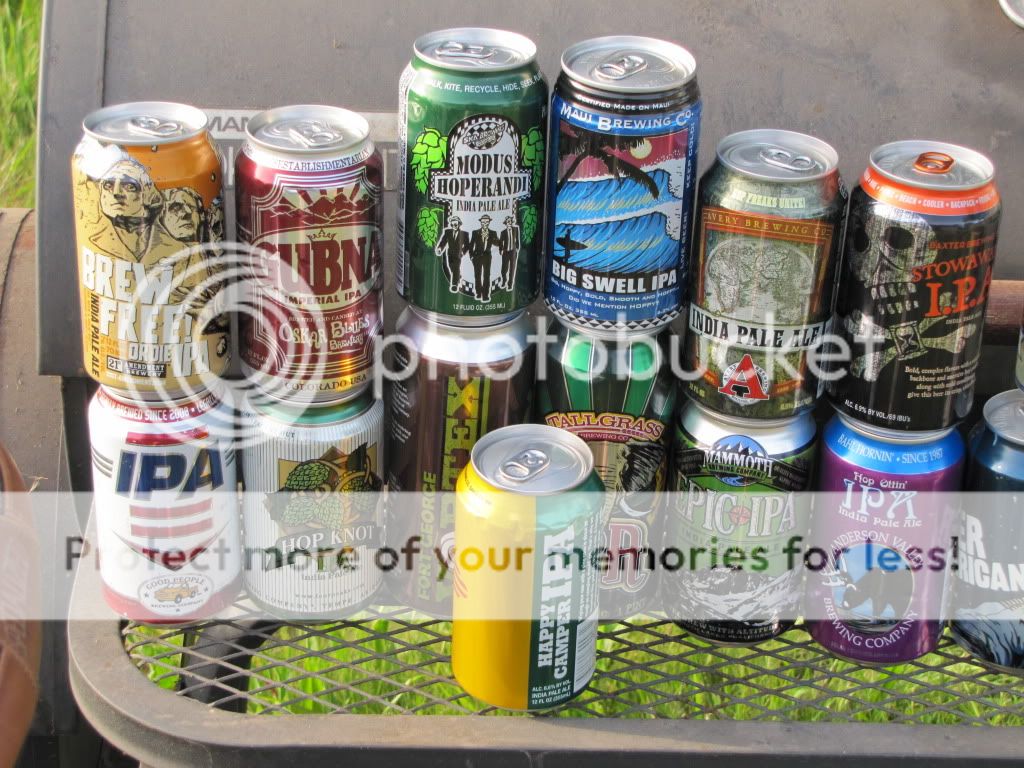
If pilsners are a bit too light for your taste but you still want the crisp flavor of a lager, there are still plenty of options. Bock’s, amber lagers, Oktoberfest märzen; they’re all coming in cans. As a lover of märzen, the Santa Fe Oktoberfest jumps out to me, but it may also be the can. (See if you can identify their cans in the pictures of this article. I love their simple style). Whichever way you go, look for a more full-flavored lager than what your dad packed in the cooler.

Anchored by the success of brands such as Blue Moon and before that Widmer, the wheat beer style is almost a must have in any summer cooler. Be it a flavored-wheat containing fruit, spices or both, or simply a lighter ale brewed with the same result in mind, these are craft brewing’s answer to the traditional lager and pilsner. Light and refreshing with more body and signature ale esters, hot weather doesn’t stand a chance when you’ve packed these cans.

Chances are, if you’re reading this article, you’re a fan of hops. This is where you’re invited back into the conversation as the pale ale category is full of canned beer. With the standard for pale ale, Sierra Nevada, starting their own canning operation later this year, it’s nice to see a wide variety of pales to quench our thirsts right now. It’s in this group that you’ll find the first craft beer I ever enjoyed in a can, and I was immediately won over. Good to see ya Dale.

The hops really step it up a notch with the IPAs available in cans. These are no light bodied faux-IPA either. From one of the first beers to make me truly understand what hops were (Hop Ottin IPA) to one of the hoppiest beers I’ve ever had anywhere (Oskar Blues’ Gubna), the IPA category is bursting and is almost becoming the go to style in terms of canning. As the general public clamors for more IPA, it’s only a matter of time until this stack of IPA cans rivals and surpasses those of pilsners and lagers.

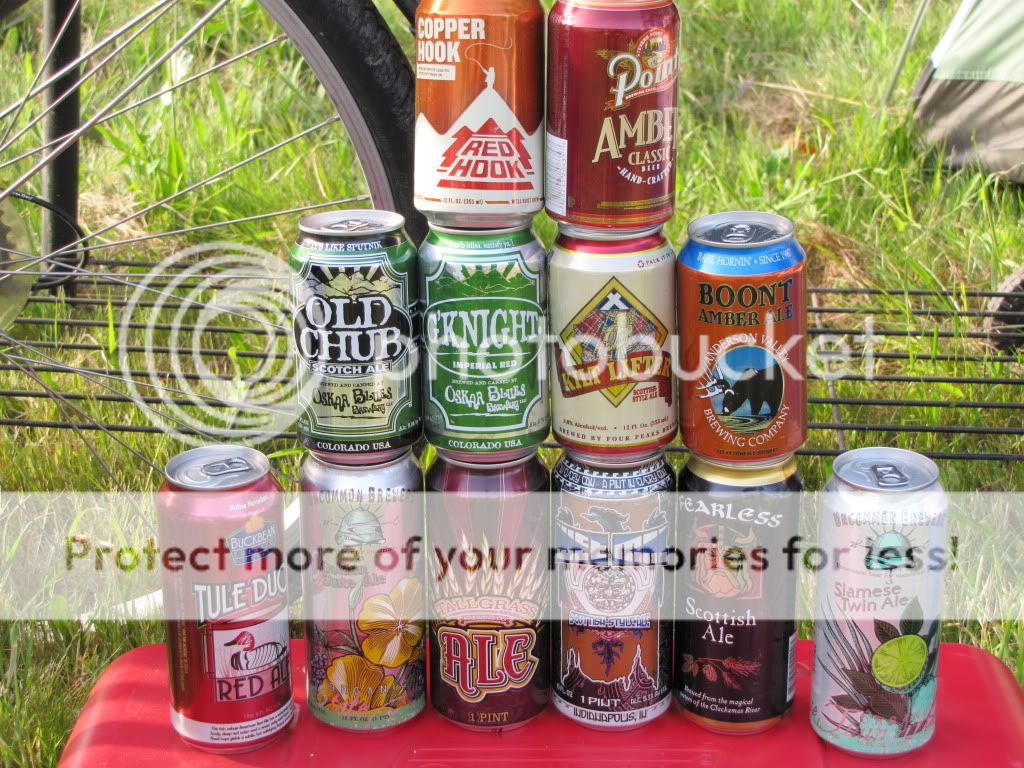
As we get into the darker colored beers found in cans, our styles begin to fall apart. Those of amber hues range from classic amber and red ales to Scottish Ales, Imperial reds and Belgian-styled beers. Keep these in the cooler for when the sun begins to creep behind the horizon as their richer malt flavors will go well with that campfire dinner.

Last but not least, as the sun sets on this canned collection, we get into “the dark beer.” As with the ambers, the styles fall apart completely here. Porters, Black IPA, Stouts, and even Imperial stouts, they can all be found in cans. These are the beers that will surprise most who are new to cans. The idea of an imperial stout, coconut infused porter or even a brown ale may seem odd, It even looks odd when pouring out of a can, but the beer is fine. In fact, as mentioned with pilsners, these bigger beers can stay fresh longer in a can. Aging canned beers is a questionable proposition. I’ve aged cans of Ten Fidy for a year and the result wasn’t as noticeable as I might have expected.

Wherever this summer takes you, rest assured knowing you have a wide selection of cans to pack in the backpack, throw in the camping cooler or just sit back at home and drink.


From: http://mariorubio.hoppress.com/2011/04/28/canned-in-the-usa/

Wednesday, April 27, 2011

Recycling Cans - How it all started.

How Aluminum Can Recycling Started

TEXT SIZE: A A | POST A COMMENT | PRINT
Add to my favorites
How Aluminum Can Recycling Started

How Aluminum Can Recycling Started

Overview

Metal cans were originally developed to store food for soldiers to carry into the field. In 1795, the French government offered a prize of 12,000 francs to anyone who could invent an effective means of preserving food, according to the Can Manufacturers Institute, the trade association of the metal can manufacturing industry. Nicholas Appert, who won the prize, packaged partially cooked food in air-tight glass bottles sealed with corks. Early cans were made of tin, which corrodes when exposed to the acids found in soft drinks.

Identification

Aluminum, which was discovered in the 1820s, is the most abundant metal on Earth, according to the environmental group Earth 911. Aluminum is made by mining deposits of bauxite ore and refining it into aluminum metal using electricity, according to the U.S. Environmental Protection Agency, or U.S. EPA.

Features

Aluminum is a durable metal that can be used over and over. Earth 911 reports that 50 percent of all aluminum cans are recycled. Aluminum cans are portable, lightweight containers that keep beverages cold. Their rigid structure keeps the cans from being broken or crushed during shipping. According to the Can Manufacturers Institute, manufacturers constantly change the shapes and sizes of aluminum containers. The EPA estimates that 99 percent of beer containers and about 97 percent of soda cans are aluminum.

History

During the 1940s, manufacturers began exploring how to adapt tin cans to package carbonated soft drinks. They began using aluminum cans as beverage containers in 1965. The success of the aluminum can results primarily from its recycling value, according to the Can Manufacturers Institute. The aluminum can recycling infrastructure developed after the first Earth Day in 1970. By the 1990s, recycling aluminum cans became a way of life for many people.

Benefits

The benefits of recycling aluminum cans include saving money and reducing energy consumption. The EPA estimates that recycling cans saves about 92 percent of the energy needed to produce aluminum from bauxite. According to the Can Manufacturers Institute, recycling cans minimizes consumer and production waste. Recycled aluminum cans can be back on store shelves as new beverage containers in about 60 days, according to Earth 911.

Considerations

Aluminum beverage containers are the largest source of aluminum in the municipal solid waste stream, according to the EPA. People can recycle aluminum to raise money. An empty aluminum can is worth about 1 cent. Earth 911 reports that the aluminum industry pays out about $800 million dollars for empty aluminum cans each year (Reference 5). Aluminum recycling allows charitable organizations to fund local projects, such as school improvements. The Cans for Habitat program, a joint partnership between the Aluminum Association and Habitat for Humanity International, supports a network of drop-off locations to recycle aluminum cans to help raise money to build affordable housing for low-income families around the country, according to Earth 911.


Read more: http://www.livestrong.com/article/197840-how-aluminum-can-recycling-started/#ixzz1KIn2eHl9

Tuesday, April 26, 2011

Facts about recycling your cans

Facts About Recycling Aluminum Cans

TEXT SIZE: A A | POST A COMMENT | PRINT
Add to my favorites
Facts About Recycling Aluminum Cans

Facts About Recycling Aluminum Cans

Overview

It may be hard to believe that the ubiquitous aluminum beverage cans have only been around since 1965, according to Earth911.org. Aluminum has grown from an industry producing a mere 340,000 tons of municipal solid waste in 1960 to 3.4 million tons in 2008. Aluminum is the material of choice for 99 percent of all beer cans and 97 percent of all soft drink cans, based on U.S. Environmental Protection Agency (EPA) figures. With the amount being generated, you may wonder how much is being recycled.

Benefits

Recycling aluminum cans represents a tremendous energy savings. The EPA estimates that recycling cans uses less than 10 percent of the energy of manufacturing cans from virgin ore. The energy savings are due in part to how aluminum is recovered. Bauxite ore must be mined and then refined in order to make aluminum cans. According to the Mineral Information Institute, Australia is the world's top producers of this ore, with the U.S. contribution only negligible. The energy savings include the cost of importing aluminum.

Significance

Recycling of aluminum cans has grown steadily over the years. In 2007, nearly 50 percent of the aluminum cans generated was recovered through recycling. If you are one of the many Americans who recycle aluminum cans for money, you had your share of the approximately $1 billion in revenue Americans make each year, according to the Can Manufacturers Institute.

Environmental Benefits

One of the most important environmental benefits is the reduction of landfill waste when you recycle rather than discard aluminum cans. The Can Manufacturers Institute estimates that recycling prevented 1.7 billion pounds from being added to the nation's landfills. According to Earth911.org, aluminum can be continually recycled. The recycled products are durable and reusable. The turnaround from recycling to a new can of pop or beer is about six weeks, according to the EPA.

Recycling Centers

Earth911.org can assist you in locating a recycling center in your area. You should also contact your waste management service to look into recycling options in your area. Curbside recycling is available in many communities, making it an easy option for recycling your aluminum cans.

Charitable Causes

Recycling aluminum cans is one way in which you can support charitable activities. The Recycle Challenge program provides assistance for schools to earn money from recycling aluminum cans. The program is funded by the Aluminum Can Council, with assistance from Anheuser-Busch. The Aluminum Association also runs its own "Cans for Causes" program which provides fundraising assistance to all organizations including Girl Scouts and Boy Scouts. Not only can you help the environment, but you can also support worthy causes by recycling aluminum cans.


Read more: http://www.livestrong.com/article/140474-facts-about-recycling-aluminum-cans/#ixzz1KInS7XF3