Search The Bohemian Brewery Blog

Showing posts with label Craft Brewing. Show all posts

Monday, August 8, 2011

Can there be too many breweries?

Today we find ourselves in a brewing boom in the United States. The Bohemian has only been around for about 10 years (founded in and opened our doors in 2001) and we still feel like a new coming to this industry among others like Sierra Nevada who have hit 30 this past year. Now, we're not owned by deep pockets or some midwest corporation so our growth has been steady but humble all done with our own capital. No investors or outside partners. Just a mom & pop shop. Literally. The popularity of consumers switching from macro beers to craft beers is refreshing. But with this turn in popularity you start seeing dollar signs in peoples eyes. We find our selves in a funny situation asking the question; "Can there be too many breweries?"

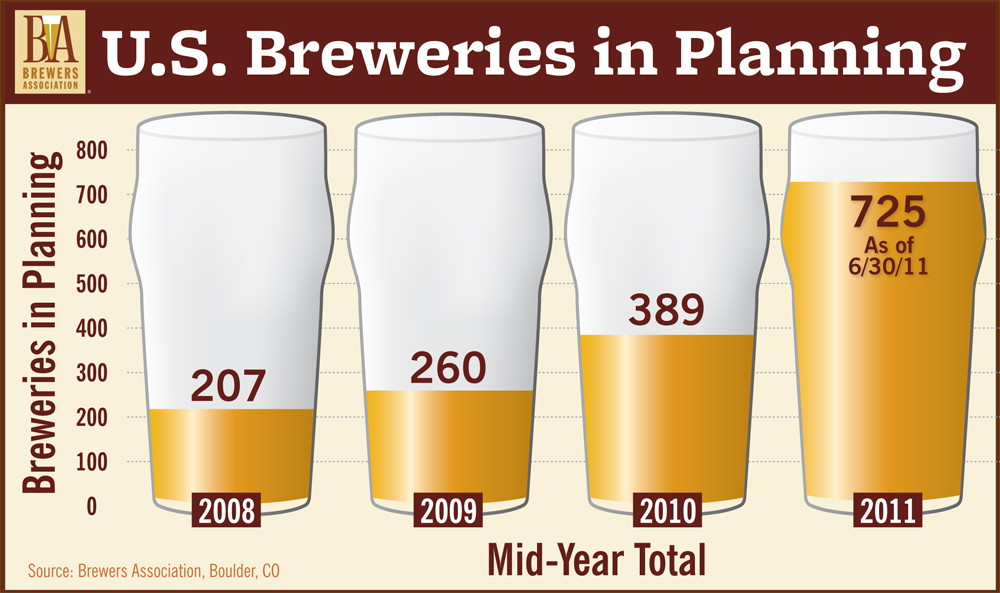
Don't get us wrong. Competition is always good for business. And the more craft the merrier is what we like to say. As long as someone is drinking quality over quantity we're on the right track. Right? Today I read a press release by the Brewer's Association (below) and found an alarming number of breweries being planned for production. What does this mean? Is this sustainable? Is this the beer equivalent of the yogurt craze in the 90's and now the similar craze with frozen yogurt and berries? Will be be doomed to the same fate as wine? Is it a fad? Will big beer die? Will craft come out on top?

Realistically there are only so many beer drinkers out there. You can get new drinkers simply with the coming of age. With craft it's more like growing up and enjoying a beer rather than getting plowed off of beer. You also loose them due to age, diet and other personal reasons. Craft has been converting people to purchase a quality 6 pack over a cheap 12 pack. Drinking beer instead of wine with a meal. But what happens if you have too many choices (gulp - did I really say that?).

For the off premiss side of things think of it this way. I always equate craft beer to dairy or specifically milk. Sure beer won't go bad as fast as milk but it does have a limited shelf life and limited shelf space. If you go to a c-store you see maybe 7 or 10 brands of milk (in urban areas) including Soy. But typically you see 4 at the most. Now milk is something a lot of people drink. Babies all the way to the Elderly. The age window for a beer drinker is arguable much smaller. They also drink a lot more and more often. But yet you don't see 155 types of milk at the store. What happens with you get too many beer options? Sure, the bad beer will get weeded out eventually but after causing how much damage? But what happens to the large craft players do they feel the pinch as the macro breweries do right now? What about the small regional craft breweries? What about all breweries? Does everyone simply throw away half of their product because it expires on the shelf due to too many options and product not moving?

The future looks to hold a lot of beer. Hopefully good, no - great beer. Until then we watch the growth with optimism and caution.

BA release below:

BREWERS ASSOCIATION REPORTS 2011 MID-YEAR GROWTH FOR U.S. CRAFT BREWERS

Brewers Association Reports 2011 Mid-Year Growth for U.S. Craft Brewers

Dollar growth up 15% in first six months of 2011; U.S. sees rapid growth in breweries in planning

Boulder, CO • August 8, 2011 - The Brewers Association, the trade association representing the majority of U.S. brewing companies, has released strong mid-year numbers for America's small and independent craft brewers¹. Dollar sales were up 15 percent in the first half of 2011, excluding brewers who left the craft segment in 2010². Volume of craft brewed beer sold grew 14 percent for the first six months in 2011, compared to 9 percent growth in the first half of 2010.

Barrels sold by craft brewers for the first half of the year are an estimated 5.1 million barrels. Despite many challenges, the mid-year numbers show signs of continued growth for craft breweries. The industry currently provides an estimated 100,000 jobs, contributing significantly to the U.S. economy.

"Craft brewers continue to innovate and brew beers of excellent quality," noted Paul Gatza, director of the Brewers Association. "America's beer drinkers are rapidly switching to craft because of the variety of flavors they are discovering. And they are connecting with small and independent craft brewers as companies they choose to support."
bip2011_final

Download a high resolution version of this graphic

The U.S. now boasts 1,790 breweries—an increase of 165 additional breweries since June 2010. The Brewers Association also tracks breweries in planning as an indicator of potential new entrants into the craft category, and lists 725 breweries in planning today compared to 389 a year ago. Additionally, the count of craft brewers was at 1,740 as of June 30, 2011.

"There is a growing interest in establishing new breweries," Gatza added. "It seems like every day we are hearing about a brewery in planning. Will they all make it? No, but many will if they produce high-quality, interesting craft beers and can get them to market through self-distribution and beer wholesalers and beer retailers."

¹ The definition of a craft brewer as stated by the Brewers Association: An American craft brewer is small, independent, and traditional. Small: Annual production of beer less than 6 million barrels. Beer production is attributed to a brewer according to the rules of alternating proprietorships. Flavored malt beverages are not considered beer for purposes of this definition. Independent: Less than 25% of the craft brewery is owned or controlled (or equivalent economic interest) by an alcoholic beverage industry member who is not themselves a craft brewer. Traditional: A brewer who has either an all malt flagship (the beer which represents the greatest volume among that brewers brands) or has at least 50% of its volume in either all malt beers or in beers which use adjuncts to enhance rather than lighten flavor.
2 Three former craft brewing companies left the segment in the second half of 2010 when transitions led them to no longer meet the Brewers Association's definition of independence.

Contact

Paul Gatza, Director
paul@brewersassociation.org, 303.447.0816 x122

Julia Herz, Craft Beer Program Director
julia@brewersassociation.org, 303.447.0816 x113

###

The Brewers Association is the not-for-profit trade association dedicated to small and independent American brewers, their craft beers and the community of brewing enthusiasts. The Brewers Association (BA) represents more than 70 percent of the brewing industry, and its members make more than 99 percent of the beer brewed in the U.S. The BA organizes events including the World Beer Cup®, Great American Beer Festival®, Craft Brewers Conference and BrewExpo America®, SAVOR: An American Craft Beer & Food Experience and American Craft Beer Week. The BA publishes The New Brewermagazine and its Brewers Publications division is the largest publisher of contemporary and relevant brewing literature for today's craft brewers and homebrewers.

Beer lovers are invited to learn more about the dynamic world of craft beer at CraftBeer.com and about homebrewing via the BA's American Homebrewers Association. Follow us on Twitter.

Tuesday, July 12, 2011

Bohemian Brewery on the DABC Show

The DABC Show 2: Bohemian Brewery

by Bill Frost
-POSTED // 2011-07-11 -It's the second episode of The DABC Show (Drinking Alcoholic Beverages Constantly), wherein myself and Steve Koonce visit local joints that make great beer, drink a few and slap together a web show about it. This time: Midvale'sBohemian Brewery.

There's drinking, eating, more drinking and a satellite throw to Steve at some beer festival in Idaho Falls. Then, some more drinking--and if you're not careful, you might even learn something ...

    Monday, May 16, 2011

    American Craft Beer Week. 7 Days, 7 Ways

    7 Days and 7 Ways to Celebrate American Craft Beer

    With more than 500 official events planned over 7 days, in all 50 states, there is no excuse not to celebrate American Craft Beer Week this May 16-22. The majority of Americans live within 10 miles of a craft brewery, but if you aren't so fortunate, scores of bars, restaurants and craft beer retailers have you covered. There are currently over 1,700 small and independent craft brewers in the U.S. today, and each one contributes to its community in some way. American Craft Beer Week celebrates these small businesses and toasts their success.

    Here are 7 ways to join in the celebration,

    1. Support Your Local Brewery
    Most places in the United States enjoy a vibrant or up-and-coming local craft beer culture. Have you visited all the breweries in your town? Does your bar proudly serve the local small brewers’ craft beers? Remember, the best tasting craft beer is usually the freshest; you can’t get any fresher than straight from the tank.

    2. Look for New, Special and Collaborative Beer Releases
    You and I aren’t the only ones excited about American Craft Beer Week; the brewers are, too. All over the country craft brewers will release special beers in honor of ACBW. Often these beers are brewed in very limited quantities, so don’t miss out!

    3. Experience Craft Beer and Food
    We live in a time where the flavors and possibilities of craft beer and food pairing are limitless. If you have not had the pleasure of experiencing what talented chefs and brewers can do with craft beer and food, use this as an opportunity to discover what you are missing.

    4. Attend a Craft Beer Festival
    Festivals are the place to learn more about craft beer and craft brewers. The excitement and camaraderie of enthusiast and brewer alike make this an option that should not be passed up.

    5. American Craft Beer Week Bar Crawl
    May is also National Tavern Month, which just happens to go along with craft beer like beer and a burger... And hey, it’s also National Burger Month! We can’t argue with that coincidence. Check out bars that are planning ACBW festivities or hop on one of the pub crawls and grab a craft beer and a burger.

    6. Craft Beer for a Cause
    Craft brewers give a lot back to their communities, and you can, too. Enjoy a charity-minded beer event where what tastes good feels even better.

    7. Share
    Craft beer would be missing something if you didn’t have people to share it with. Bring your “I don’t like beer” friend along to an event and give them every chance to discover what all the fuss is about. You can even share great craft beer with friends online—this American Craft Beer Week,Untappd is recognizing ACBW with its very own badge.

    Need more events?
    Search by state through the Official American Craft Beer Week Event Calendar.

    Thursday, April 28, 2011

    Mario Rubio on craft canned beer.

    Canned in the USA

    Here in Sonoma County, it looks like the last of the rain has fallen for the year. The ground is no longer moist to the touch and the forecast is nothing but sun and increasing temperatures. Looks like it’s time to start making weekend plans that include long stretches of outdoor activity (not that a Bay Area winter exactly chases one inside). When heading outdoors, a bottle can be a bit of a hassle: heavy, breakable and no easier to carry once emptied. Thank God craft beer is becoming increasingly available in cans. How much more available? Well you’ll just have to keep reading to find out.

    While many of us grew up with nothing more than industrial lagers in cans, the variety of beer available in cans today is staggering. From light pilsners to hoppy IPA to thick and viscous imperial stouts, everything a beer lover could want can be found in a can. Let’s take a look at a sample of what might be out there for each individual’s taste, or for each situation.

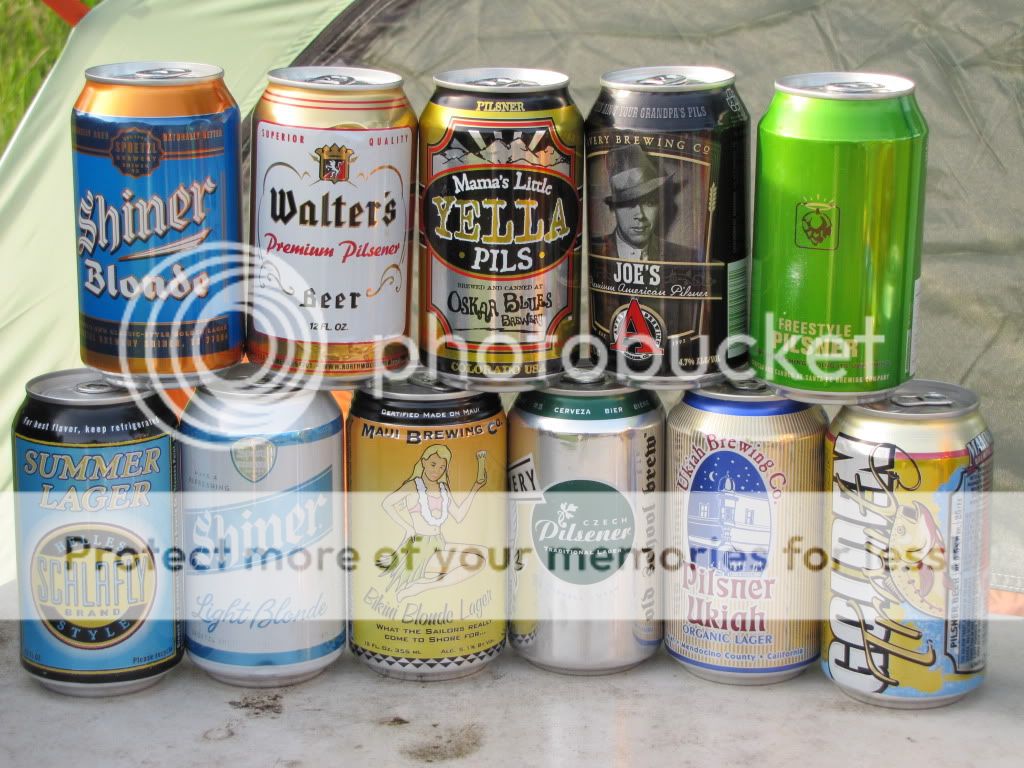
    On the hot days, a crisp pilsner (or reasonable approximation of a pilsner) may be exactly what you’re looking for. The pilsner style is definitely represented within the canned market. The style is made for cans with its subtle hopping needing the added protection of the can’s aluminum. Additionally, these beers, meant to be served cold, will ice down in no time.

    If pilsners are a bit too light for your taste but you still want the crisp flavor of a lager, there are still plenty of options. Bock’s, amber lagers, Oktoberfest märzen; they’re all coming in cans. As a lover of märzen, the Santa Fe Oktoberfest jumps out to me, but it may also be the can. (See if you can identify their cans in the pictures of this article. I love their simple style). Whichever way you go, look for a more full-flavored lager than what your dad packed in the cooler.

    Anchored by the success of brands such as Blue Moon and before that Widmer, the wheat beer style is almost a must have in any summer cooler. Be it a flavored-wheat containing fruit, spices or both, or simply a lighter ale brewed with the same result in mind, these are craft brewing’s answer to the traditional lager and pilsner. Light and refreshing with more body and signature ale esters, hot weather doesn’t stand a chance when you’ve packed these cans.

    Chances are, if you’re reading this article, you’re a fan of hops. This is where you’re invited back into the conversation as the pale ale category is full of canned beer. With the standard for pale ale, Sierra Nevada, starting their own canning operation later this year, it’s nice to see a wide variety of pales to quench our thirsts right now. It’s in this group that you’ll find the first craft beer I ever enjoyed in a can, and I was immediately won over. Good to see ya Dale.

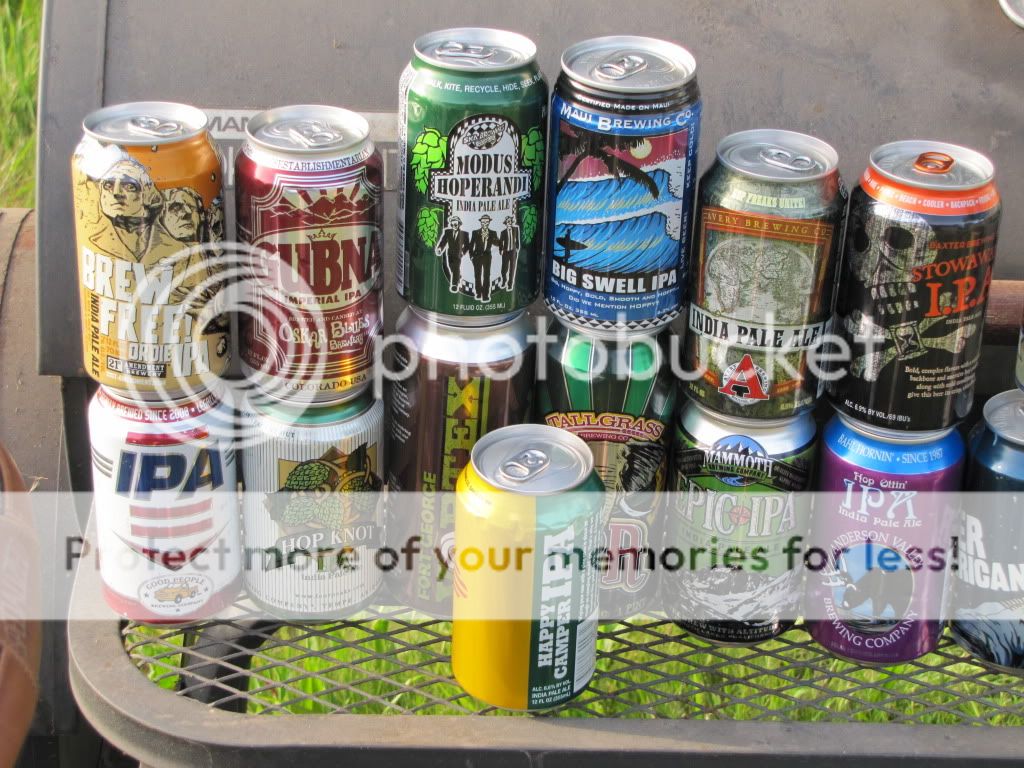
    The hops really step it up a notch with the IPAs available in cans. These are no light bodied faux-IPA either. From one of the first beers to make me truly understand what hops were (Hop Ottin IPA) to one of the hoppiest beers I’ve ever had anywhere (Oskar Blues’ Gubna), the IPA category is bursting and is almost becoming the go to style in terms of canning. As the general public clamors for more IPA, it’s only a matter of time until this stack of IPA cans rivals and surpasses those of pilsners and lagers.

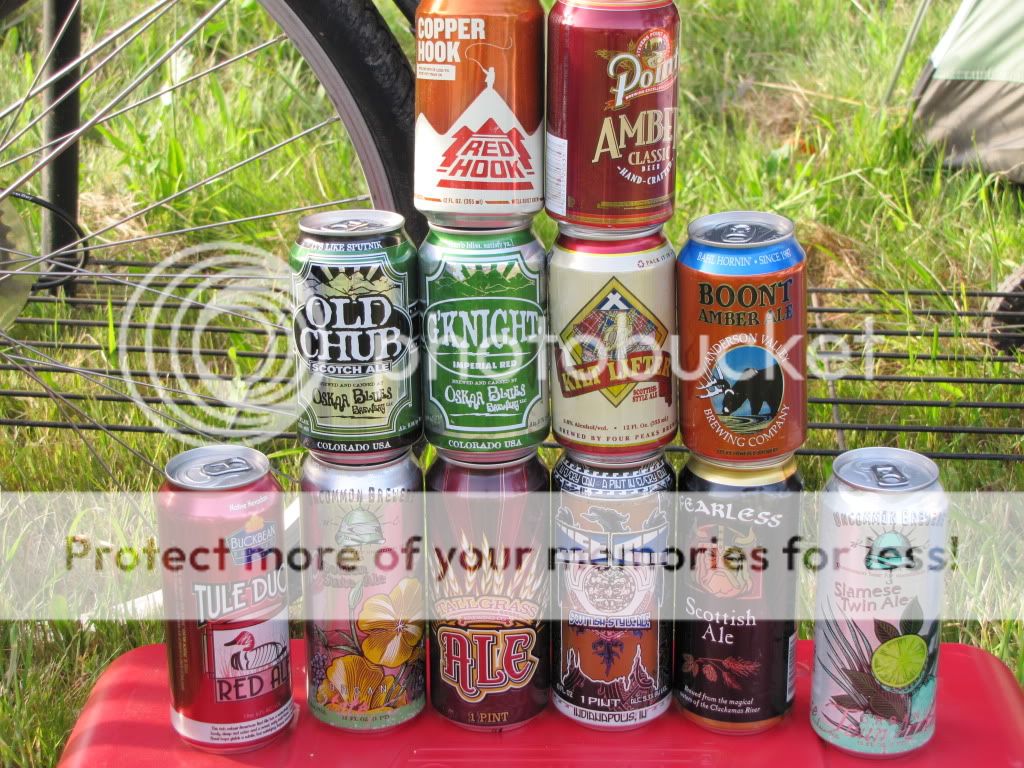
    As we get into the darker colored beers found in cans, our styles begin to fall apart. Those of amber hues range from classic amber and red ales to Scottish Ales, Imperial reds and Belgian-styled beers. Keep these in the cooler for when the sun begins to creep behind the horizon as their richer malt flavors will go well with that campfire dinner.

    Last but not least, as the sun sets on this canned collection, we get into “the dark beer.” As with the ambers, the styles fall apart completely here. Porters, Black IPA, Stouts, and even Imperial stouts, they can all be found in cans. These are the beers that will surprise most who are new to cans. The idea of an imperial stout, coconut infused porter or even a brown ale may seem odd, It even looks odd when pouring out of a can, but the beer is fine. In fact, as mentioned with pilsners, these bigger beers can stay fresh longer in a can. Aging canned beers is a questionable proposition. I’ve aged cans of Ten Fidy for a year and the result wasn’t as noticeable as I might have expected.

    Wherever this summer takes you, rest assured knowing you have a wide selection of cans to pack in the backpack, throw in the camping cooler or just sit back at home and drink.


    From: http://mariorubio.hoppress.com/2011/04/28/canned-in-the-usa/